When trading burnout stress becomes your silent killer
Most traders don't crash from one bad trade. They burn out from the relentless pressure. Here's how to recognize it before it's too late.

Stefan Hertweck
Trading Psychology & KI-gestütztes Journaling
Veröffentlicht: 27. Juli 2026
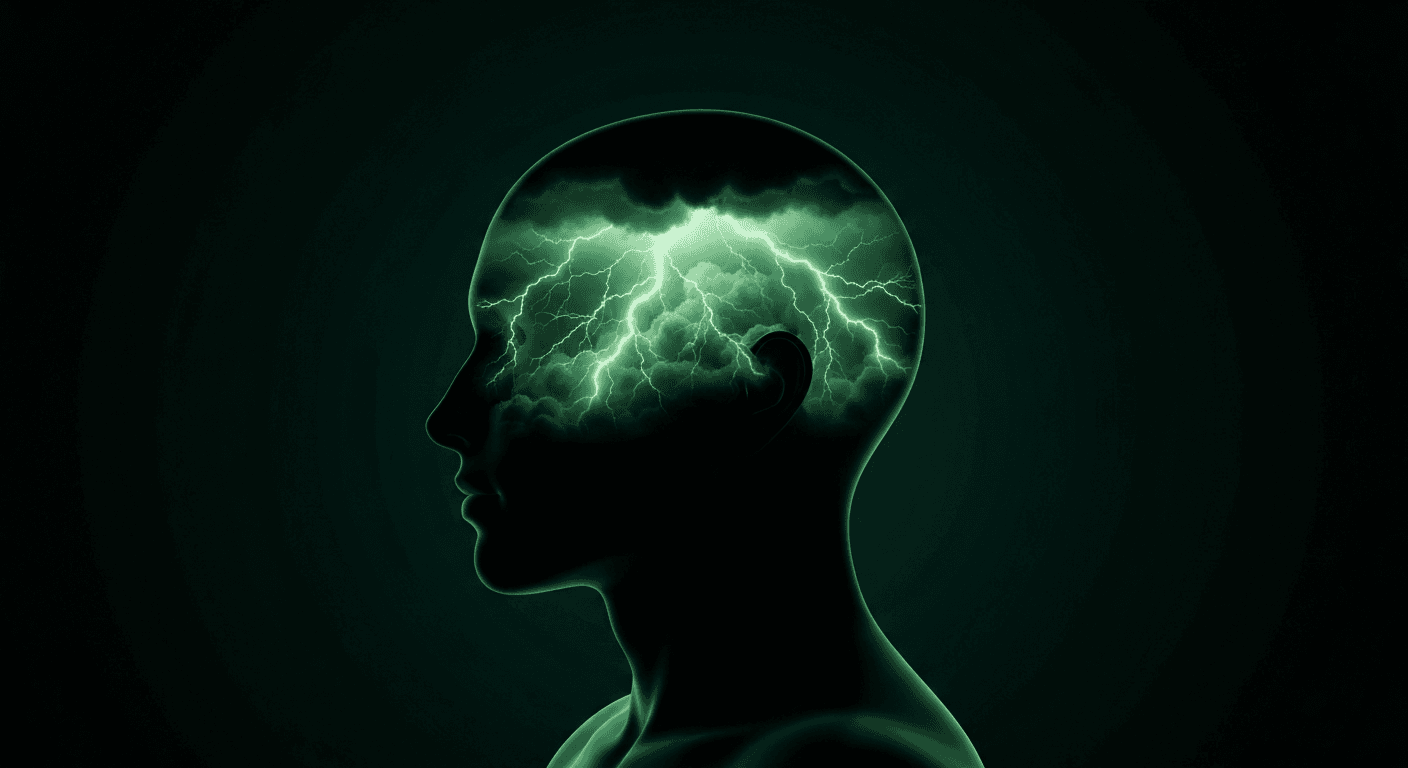
Trading burnout stress isn't something you see coming. You wake up one morning and realize you've stopped enjoying the markets. Your edge is still there—your strategy still works—but the mental load has become unbearable. You check charts obsessively even when markets are closed. Sleep vanishes. Every loss feels personal. Every win feels hollow. This is the reality most traders face but rarely talk about. The difference between a sustainable trading career and a crash into burnout often comes down to one thing: knowing why it happens and having a system to catch yourself before you hit the wall.
The anatomy of trading burnout: what you're actually experiencing
Trading burnout stress develops in stages, and most traders don't recognize them until they're deep in. The first stage is obsession—you're monitoring positions constantly, refreshing news feeds, analyzing every micro-movement. Your brain is flooded with cortisol and adrenaline. Then comes the performance anxiety: you start second-guessing your system because the emotional weight of each trade has become too heavy. Finally, you hit emotional exhaustion, where you either quit trading entirely or make reckless decisions just to feel something again.
The Dalbar QAIB Report shows that retail investors consistently underperform market indexes—not because their strategies are flawed, but because behavioral pressure breaks their discipline. Loss aversion, documented by Kahneman and Tversky, means losses hit your brain 2x harder than equivalent gains feel good. This asymmetry compounds over time. A trader with a 50% win rate can still experience severe stress because the losses create deeper emotional wounds. Add social pressure, financial dependence on trading, and irregular hours to the mix, and you have the perfect storm for burnout. The physical symptoms appear next: insomnia, digestive issues, chronic fatigue, headaches. By this point, most traders believe the problem is their trading method, not their mental state. That's where the real danger lies.
Why your nervous system is working against your trading discipline
Under financial threat, your amygdala activates faster than your prefrontal cortex can respond. This is neuroscience, not weakness. When you're exposed to consecutive losses or periods of draw-down, your brain enters a protective state. It stops thinking long-term and starts thinking survival. Your system becomes hypersensitive to risk—you overtrade trying to recover losses, or you freeze up and miss high-probability setups.
Trading burnout stress also thrives in isolation. Unlike other professions, trading feedback is delayed and personal. Your boss doesn't evaluate you—the market does. And the market is ruthless. There's no team to share the burden with, no colleagues to process the emotional weight. Many traders work alone for 6-8 hours a day, staring at screens, living and dying by each price tick. The absence of social processing compounds the stress.
The Disposition Effect—a well-documented behavioral bias—emerges from this state: you sell winners too early to lock in the small comfort of a win, and you hold losers too long hoping to break even. Both behaviors destroy long-term returns and feed the burnout cycle. You're not trading worse because you're stupid. You're trading worse because your nervous system is in survival mode, and survival mode doesn't care about your edge.
Breaking the cycle: how emotion tracking and AI coaching reshape your discipline
This is where FlowTrader AI changes the equation. You don't need a new trading method. You need visibility into the emotional and psychological patterns that break your existing method. FlowTrader AI's emotion tracking system captures how you feel before, during, and after every trade. This isn't vague sentiment—it's structured data that shows you the exact moments when stress, fear, or overconfidence hijacks your decision-making.
The AI coach Flow analyzes these patterns in real time. It identifies the specific setups where you're most vulnerable to trading burnout stress, the times of day when your discipline collapses, and the emotional states that precede your worst trades. Instead of white-knuckling your way through trading, you get early warning signals. You see the pattern before you make the mistake.
The mindset sessions built into FlowTrader AI are designed by traders who've been through burnout and recovered. They're not generic meditation talks. They're targeted interventions that address the specific psychological triggers of trading pressure. The discipline system helps you stick to your rules during high-stress periods—not through willpower, but through structure. You set your limits before emotion clouds your judgment, and the system enforces them. Over time, this creates a feedback loop: better emotional awareness leads to better trading decisions, which reduces stress, which improves your long-term consistency.
Four immediate actions to prevent trading burnout stress today
You don't need to overhaul your entire life to stop the burnout spiral. Small structural changes, started now, compound into resilience.
1. Set fixed market hours and defend them ruthlessly. Trading 24/7 is a guaranteed path to burnout. Decide your trading window—say 8 AM to 12 PM—and don't check charts outside it. Your edge doesn't require constant monitoring. The illusion that you do is the first sign of stress taking over.
2. Log every trade with the emotion you felt, not just the P&L. Before you have FlowTrader AI's emotion tracking system running, keep a simple notebook. How anxious were you? How confident? How focused? This self-awareness alone breaks the hypnotic spell of pure numbers.
3. Build a hard stop-loss rule not just on price, but on drawdown and daily loss. If you're down 2% in a day, stop. If you're in a weekly drawdown of 5%, take three days off. Your judgment is compromised when stress is high. Remove judgment from the equation.
4. Talk to someone about the pressure, even if it's not a therapist. A trading buddy, a mentor, or a structured community removes the isolation that feeds burnout. Trading burnout stress thrives in silence.
The path forward: sustainability beats brilliance every time
Trading burnout stress isn't a character flaw. It's a predictable response to unsustainable conditions. The traders who last decades aren't the ones with the highest win rates. They're the ones who built systems to protect their psychology before the pressure broke their discipline.
FlowTrader AI gives you that system. Emotion tracking reveals what's actually happening beneath the surface. AI coaching helps you respond intelligently instead of reactively. Mindset sessions rebuild your confidence without denying the real challenges. And the discipline system keeps you accountable when stress tempts you to abandon your rules.
You know how to trade. The question is whether you can keep doing it without burning out. That starts with understanding why you feel what you feel, and responding with structure instead of willpower.
Start with 7 days free · Payment method charged only after trial · Cancel anytime
Frequently asked questions about trading burnout stress
The earliest signals are usually psychological, not financial: obsessive chart-checking even when markets are closed, difficulty sleeping, constant second-guessing of your system even when it's working, and emotional numbness toward both wins and losses. Physical symptoms follow—headaches, stomach issues, fatigue. If you're experiencing any combination of these, trading burnout stress is already developing. The key is catching it in week 2, not week 12.
Breaks help, but they're not enough. Burnout isn't solved by rest alone if you return to the same unsustainable structure. You need visibility into what's actually triggering your stress—which setups, which times of day, which emotional states break your discipline. FlowTrader AI's emotion tracking system identifies these patterns so you can address the root cause, not just the symptom. Breaks are necessary, but structure is permanent.
Severely. Research shows that retail traders underperform significantly during high-stress periods due to overtrading, taking excessive risk, and abandoning proven strategies. The Disposition Effect intensifies under burnout—you sell winners too early and hold losers too long. Your edge might still exist, but stress prevents you from executing it. That's why traders with solid systems still fail: their psychology breaks before their method does.
Yes. Trading combines high uncertainty, immediate feedback, and complete personal responsibility—a recipe for rapid stress accumulation. If you're trading real money, your nervous system is under genuine threat. This isn't weakness; it's biology. The traders who recognize burnout early and build protection systems recover quickly. Those who push through often compound the damage. Early intervention matters enormously.
Normal stress is manageable—you feel tension during trades but recover afterward. Burnout is persistent exhaustion that doesn't improve with rest, emotional detachment from trading outcomes, and a sense of helplessness about your performance. Burnout also includes cynicism: you stop believing your edge exists, even though it might. If stress follows you to sleep and you wake up dreading the markets, you're in burnout territory. FlowTrader AI helps you track the transition so you can intervene before reaching that point.
Das könnte dich auch interessieren
Stefan Hertweck
Trading Psychology & KI-gestütztes Journaling
Veröffentlicht: 27. Juli 2026