How Trading Fear Freezes Your Decisions and What Actually Works
Fear costs you money every single day. Here's how to overcome trading fear before it costs you your account.

Stefan Hertweck
Trading Psychology & KI-gestütztes Journaling
Veröffentlicht: 15. Juni 2026
You know the feeling. Your setup is there. Your system says go. But something inside you screams stop. That's fear, and it's costing you trades and money. Overcome trading fear, and you overcome the biggest enemy between you and consistent execution. The problem isn't your strategy. It's not your technical analysis. It's that fear short-circuits your ability to pull the trigger when it matters. This is the gap between knowing what to do and actually doing it—and it's where most traders live.
Fear Isn't Weakness—It's Your Brain's Survival Reflex Gone Wrong
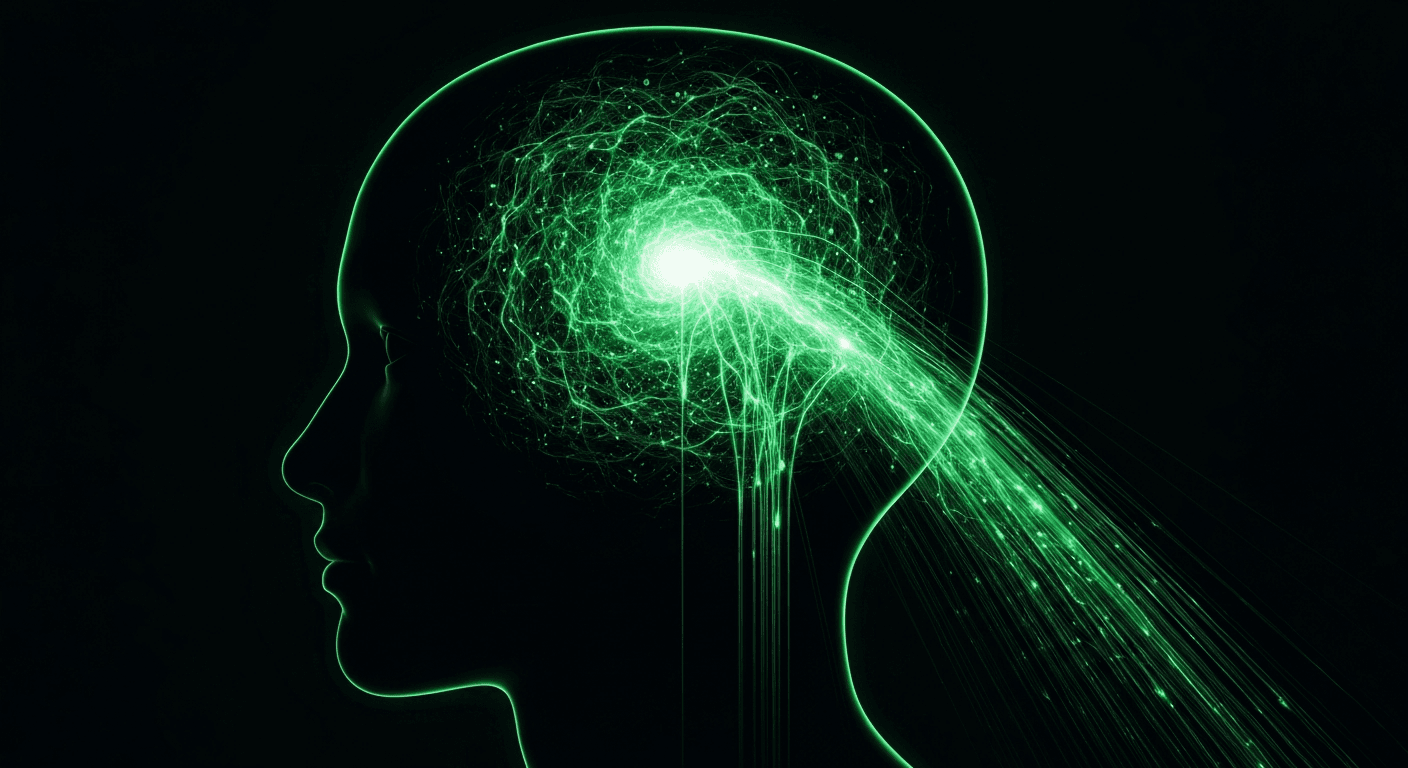
Trading fear feels like cowardice, but it's not. It's your amygdala—your brain's threat-detection system—treating a losing trade like a physical threat to your survival. When money is on the line, that ancient part of your brain takes over, flooding you with cortisol and adrenaline. Your rational mind gets sidelined.
Neuroscience shows us that under financial threat, your prefrontal cortex—responsible for decision-making—actually becomes less active while your amygdala fires up. This is why fear makes you freeze, hesitate, or exit winning trades too early. Kahneman and Tversky's research on loss aversion proved that losses psychologically hurt about twice as much as equivalent gains feel good. So your brain is literally wired to fear the downside more than it desires the upside.
The Barber and Odean study on retail trading found that 90% of day traders underperform the market. Not because they don't know how to identify setups, but because emotion interferes with execution. Fear is the main culprit. It's not a character flaw—it's a mechanical problem. Your brain's ancient wiring is fighting your modern trading goals. Understanding this shifts everything. You stop blaming yourself and start fixing the system.
Why Fear Gets Worse the Better Your Setup Looks
There's a cruel paradox in trading: the setups that matter most trigger the most fear. A high-probability setup with real risk means real money at stake. And the closer that money is to your account, the louder fear screams.
This happens because of what traders call the disposition effect—the tendency to sell winners too quickly and hold losers hoping they bounce back. The logic is pure fear: get out when you're ahead (even if your target isn't hit yet), and hold the loser because admitting defeat feels worse than hoping for a miracle. Your amygdala prefers the uncertainty of a potential recovery over the certainty of a loss.
Fear also clusters around specific moments: right before entry (what if I'm wrong?), during drawdown (I should close this before it gets worse), and after a loss (my system doesn't work, my judgment is broken). Each moment has a different flavor of fear, but the root is the same: uncertainty about outcomes you can't control, combined with your brain's exaggerated sense of threat. The Dalbar QAIB Report consistently shows investors buy high and sell low—pure emotion. Fear makes us exit at exactly the wrong time, crystallizing losses when patience would have brought recovery. The better you understand this pattern in yourself, the faster you can interrupt it.
Track Your Fear, Don't Fight It—How FlowTrader AI Breaks the Cycle
Here's what most traders get wrong: they try to eliminate fear through willpower alone. That doesn't work. Fear is a signal, not a malfunction. The real solution is visibility. You need to see the exact moments fear hijacks your decisions, and you need to see the pattern so clearly that your rational mind can intervene.
FlowTrader AI's emotion tracking is built for this. Every trade you log gets tagged with the emotional state you were in—fear, greed, hesitation, overconfidence. Over time, you see the brutal data: these specific conditions trigger my worst decisions. Maybe it's trading right after a loss. Maybe it's larger-than-usual position size. Maybe it's a certain market condition. The pattern emerges.
Once you see it, the AI coach Flow helps you build a pre-trade routine that interrupts the fear cycle before you enter. It's not meditation or breathing exercises (though those help). It's a discipline system that forces a pause between impulse and action. Your emotion tracking data feeds directly into mindset sessions tailored to your actual psychology, not generic affirmations. You're training your nervous system with real evidence from your own trading, not with theory.
The key insight: fear needs secrecy to control you. The moment you write down what you felt and why you exited, the fear loses its power. FlowTrader AI turns that into your competitive advantage—a psychological feedback loop that makes you better with every trade.
Four Concrete Moves to Overcome Trading Fear Right Now
1. Define your fear before the market opens. Write down exactly what you're afraid of today—missing the move, losing on this one specific setup, hitting your daily loss limit. Name it. This forces your prefrontal cortex back online and stops fear from acting invisibly.
2. Set your stops and exits before entry. Fear makes you move your stops or abandon your plan mid-trade. If your stops and profit targets are locked in before you risk money, fear can't change them. The discipline is already built in.
3. Track not just trades, but the emotional context. After every trade—win or loss—note how you felt. Was fear present? Did it affect your execution? Over two weeks of data, patterns emerge that willpower alone could never reveal. FlowTrader AI logs this automatically, so you get honest feedback.
4. Take smaller positions when fear is high. If you're noticing recurring fear around a certain setup or market condition, trade it smaller. You're gathering data about your psychology, not punishing yourself. Smaller positions means smaller losses while you train your nervous system to trust your system.
5. Review your trades with someone or with the AI coach. Reviewing alone lets you rationalize bad decisions. An outside perspective—whether human or AI—forces accountability and surfaces the exact moment fear took over.
6. Separate your self-worth from your P&L. This is psychological work, not trading work. Your trading results reflect your current skill level and psychology, not your value as a person. When you stop needing wins to feel worthy, fear loses its grip.
Fear Doesn't Disappear—You Just Get Better at Moving Through It
Overcome trading fear doesn't mean becoming fearless. It means seeing fear clearly, understanding why it's there, and building a system that works even when it shows up. The traders who last are not the ones with no fear—they're the ones who see it coming and have a plan.
FlowTrader AI gives you that plan. You get the emotion tracking, the AI coach who learns your psychology, the mindset sessions rooted in your actual trading data, and the discipline system that keeps fear from hijacking your execution. Seven days free—no payment method charged until after your trial ends. Cancel anytime if it's not for you.
7 days free · Payment method charged only after trial · Cancel anytime
Frequently asked questions about overcome trading fear
Healthy caution respects your risk, keeps stops tight, and lets you execute your plan. Paralyzing fear makes you exit winning trades early, move your stops, or skip setups entirely because the fear feels too intense. Fear tells you to do something different; caution tells you to stick to what works. If you're changing your system mid-trade to escape the feeling, that's fear. If you're sticking to your plan and feeling uncomfortable, that's normal—and that's the zone where growth happens.
Practice alone won't fix it. You need both. You need the trading skill to have a system worth trusting, and you need the psychology work to recognize when fear is hijacking that system. FlowTrader AI combines both: your trades build the skill, your emotion tracking reveals the psychology, and the AI coach helps you integrate them. Without the psychology component, you just repeat the same fearful patterns with more experience.
Because high-probability isn't certainty. Your brain registers real money at risk, and your amygdala doesn't care about your win rate—it cares about the possibility of loss. Kahneman's research shows losses feel about twice as painful as wins feel good. So your nervous system is biologically wired to fear even good setups. The solution isn't to feel less—it's to act despite the feeling, which is why a solid pre-trade routine and locked-in stops matter so much.
You'll notice some relief within days of tracking your emotions and seeing the pattern. Real change—where fear stops hijacking your execution—typically takes 3-6 weeks of consistent tracking and adjustments. Your nervous system learns through repetition. The more times you execute despite fear, while staying within your system, the less control fear has. FlowTrader AI accelerates this by giving you real data instead of guessing.
That's possible, but rare. Most traders confuse a bad trade with a bad system. Use FlowTrader AI's emotion tracking to separate the two. If you're executing perfectly according to your rules and still losing—that's a system problem. If you're exiting early, moving stops, or skipping setups because fear took over—that's a psychology problem. The data will tell you which one you have. Usually it's both a bit, but fear is the bigger culprit.
Das könnte dich auch interessieren
Stefan Hertweck
Trading Psychology & KI-gestütztes Journaling
Veröffentlicht: 15. Juni 2026